
Put two jars of honey side by side and you can often tell them apart before you taste a thing. One pours in a slow amber ribbon. The other sits thick and opaque, more like butter than syrup. Neither is wrong, and neither is better in every situation. The difference comes down to heat, filtration and time — and the right choice depends entirely on what you plan to do with the jar.
What the two labels actually mean
Pasteurised honey has been heated, usually somewhere between 60°C and 80°C, then cooled quickly. The reasons are practical rather than romantic: heat slows down the wild yeasts that can start fermentation in a jar, discourages crystallisation, and makes the honey thin enough to filter and bottle cleanly. What you get is the glossy, pourable honey most of us grew up with.
Raw is trickier, because it is not a protected term in UK labelling. Most producers use it to mean honey that has not been heated above hive temperature — roughly 35–40°C, about the warmth of a busy colony — and has not been finely filtered. But some raw honey is warmed just enough to pass through a coarse sieve, and some jars labelled raw have been handled more gently than others. If the detail matters to you, buy from a beekeeper who can tell you how the honey was extracted and whether it was warmed at all.
Heat, texture and crystallisation
Why raw honey sets
Honey is a supersaturated sugar solution: mostly glucose and fructose with very little water. Glucose has a habit of dropping out of solution and forming crystals, while fructose stays liquid. The more glucose in the honey, the faster it sets. Oilseed rape honey can be nearly solid within a fortnight. Acacia honey may stay runny for a year or more.
Raw honey also carries tiny particles — pollen, specks of wax, air bubbles — and crystals form around those. So raw honey tends to set sooner and more evenly than a highly filtered honey of the same variety. That is not a fault. Fine, even set honey is prized in many countries, and a smooth jar of it spreads on toast far better than a thin syrup ever will.
What pasteurisation does to texture
Heating dissolves crystals that have already begun to form and destroys the small crystal seeds that would start the next lot. Fine filtration does part of the same job by removing the particles. The result stays clear and pourable for longer — but not forever. Every honey eventually crystallises, and cool storage speeds the process up.
Worth knowing: creamed honey is not the same as pasteurised honey. It is deliberately crystallised, using a small amount of finely ground honey as a seed so the crystals stay tiny and the texture stays spreadable. It can be made from raw or heated honey.
What heat does to flavour
The delicate part of honey is its aroma, and aroma compounds are volatile. Warm them and they leave. That is why pasteurised honey tastes rounder, sweeter and more uniformly honey-ish — perfectly pleasant in a mug of tea or stirred through a marinade.
Raw honey keeps more of the place it came from. A chestnut honey with a bitter edge. Lime blossom with a faint minty lift. Heather honey, dark and almost malty. A good wildflower blend that tastes of an orchard rather than a sugar bowl. If you are eating honey off a spoon or drizzling it over yoghurt, that character is the whole point. If it is disappearing into a cake, it is largely wasted.
Which one for which job
- Everyday use. Spreading, sweetening porridge, stirring into drinks. Either type works, so choose by texture rather than label. Prefer pourable? Take clear pasteurised honey. Prefer spreadable? A set or creamed honey is easier to control and less likely to run off the edge of your toast.
- Baking and cooking. The oven will undo most of what raw honey offers, so a plain pasteurised or set honey is the sensible choice. Remember that honey is sweeter than sugar and adds liquid, so if you swap it into a recipe, trim the other liquids a little and lower the oven temperature slightly to stop the outside catching. Keep honey out of anything you are making for a baby under twelve months old.
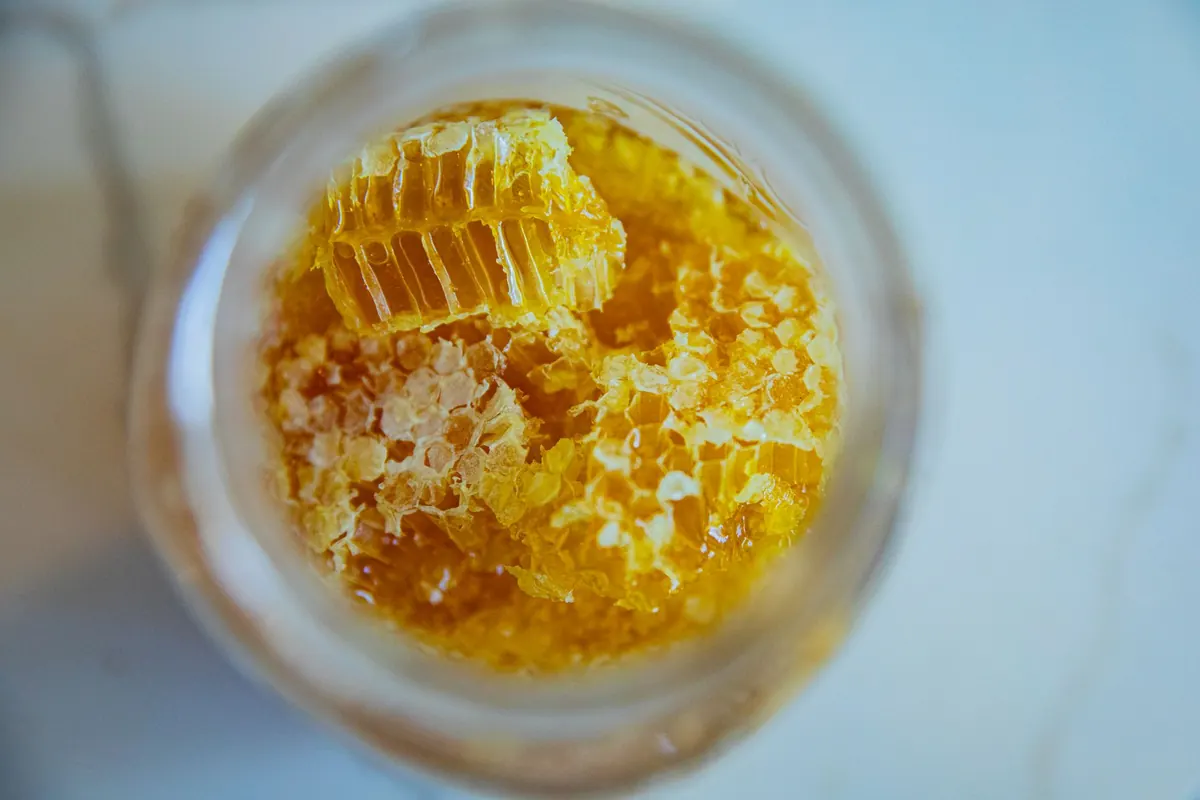
- Gifting. This is where raw earns its keep. Look for a named beekeeper, a specific origin, and ideally a harvest year on the label. A single-variety set honey in a good jar looks far more generous than a supermarket squeeze bottle, and a jar with a piece of comb in it makes a memorable present. Add a card explaining how to soften it if it sets hard.
- Health reasons. Honey is still sugar, however it was handled. Claims that raw honey calms hay fever are not well supported, and raw honey carries the same infant botulism risk as any other honey. If you are thinking about honey for a health reason, speak to your GP or pharmacist first.
How to read a jar honestly
A few phrases on a label tell you more than others. "Raw" and "pure" are both loose terms, so treat them as starting points rather than guarantees. A named origin, a harvest date and a beekeeper's name tell you far more. Blends marked only as produce of several countries can be decent honey, but you have no idea what is in them.
Crystallised honey is not spoiled honey. It is honey doing what honey does.
If a jar has set and you want it runny again, stand it in a bowl of warm water — around 40°C, no hotter than you would use for a baby's bath — and stir now and then until it loosens. Avoid the microwave; it heats unevenly and can scorch the edges while the middle stays solid.
Choosing for your kitchen
Most homes are best served by two jars. Keep a mild, pourable honey for tea, marinades and baking, and a raw or set honey for toast, cheese boards and anything where the flavour is the point. Store both somewhere cool, dark and dry, with the lid screwed tight, away from the spice rack — honey absorbs smells from whatever sits beside it. Skip the fridge, which only speeds up crystallisation.
If you buy one jar at a time, buy from a local beekeeper when you can, taste before you commit to a large pot, and take the season into account: honey varies from year to year, and a favourite jar may taste different next summer.