
Christmas shopping for someone who already owns everything is a particular kind of puzzle. Honey solves it neatly. It is consumable, so it never becomes clutter. It feels generous without being extravagant, and in the grey weeks of January a good jar of English honey is a small reminder that summer happened. The only real work is choosing well and presenting it as though you thought about it — which, by the end of this guide, you will have done.
Start with the person, not the jar
Before you look at a single gift set, picture how the recipient actually eats. A keen baker will get through a large everyday jar and will thank you for volume over novelty. Someone who takes their coffee black and their toast plain may prefer a dark, assertive honey — heather, for instance — over something delicate and floral. If they build cheese boards, look for a strong-flavoured honey to sit alongside blue cheese. If they work in an office, small jars that travel well beat one enormous pot.
And remember that honey is not the only option. Beeswax candles, beeswax food wraps, lip balms and furniture polish all make handsome gifts for people who rarely eat the stuff, or who are cutting back on sugar. A pair of good candles wrapped in a tea towel is a proper present.
Gift sets, hampers and tasting boxes: what you are actually buying
These three words get used interchangeably online, and the differences matter when you are spending real money.
Tasting boxes
Usually three to five small jars, each from a different floral source, so the recipient can compare a spring blossom against a summer wildflower against something darker and more robust. These suit curious eaters and anyone who cooks. Two things to check: whether the set comes with a card or booklet explaining each honey, and the total weight rather than the number of jars. A box of five 40g jars looks substantial in a photograph and disappears in a fortnight.
Beeswax hampers
Non-edible and often better value than they look: candles, soap, balm, wraps, sometimes a beeswax polish for wooden furniture. They travel well by post and they suit households where nobody is especially fussed about honey. Check that the wax is described as pure or natural rather than simply "beeswax scented", which can mean paraffin with a fragrance.
Mixed sets and everyday bundles
A jar of honey plus a honey dipper, a honey mustard, a bag of shortbread or a small truckle of cheese. These make excellent family gifts because there is something for everyone, and they are easy to assemble yourself if the ready-made versions feel overpriced.
Matching the gift to your budget
Prices swing widely by region, season and how far the honey has travelled, so treat these as shapes rather than numbers.
- Token gifts and Secret Santa: one well-chosen jar, a beeswax candle, or a dipper paired with a small pot. Presentation matters more than spend at this level.
- Mid-range: a two or three jar tasting set, or a honey-and-something bundle from a deli or market stall.
- Generous: a full hamper, or a standing order from a local beekeeper who will send a jar every few months. That last one lands beautifully in February.
- Group gifting: colleagues can split the cost of one good hamper and still give something that feels considered.
Watch the postage. A glass jar is heavy, and delivery charges can quietly double the cost of a small order. Order in late November where you can — small beekeepers routinely sell out before mid-December, and the last posting dates arrive faster than anyone expects.
Presentation: the gap between a jar and a gift
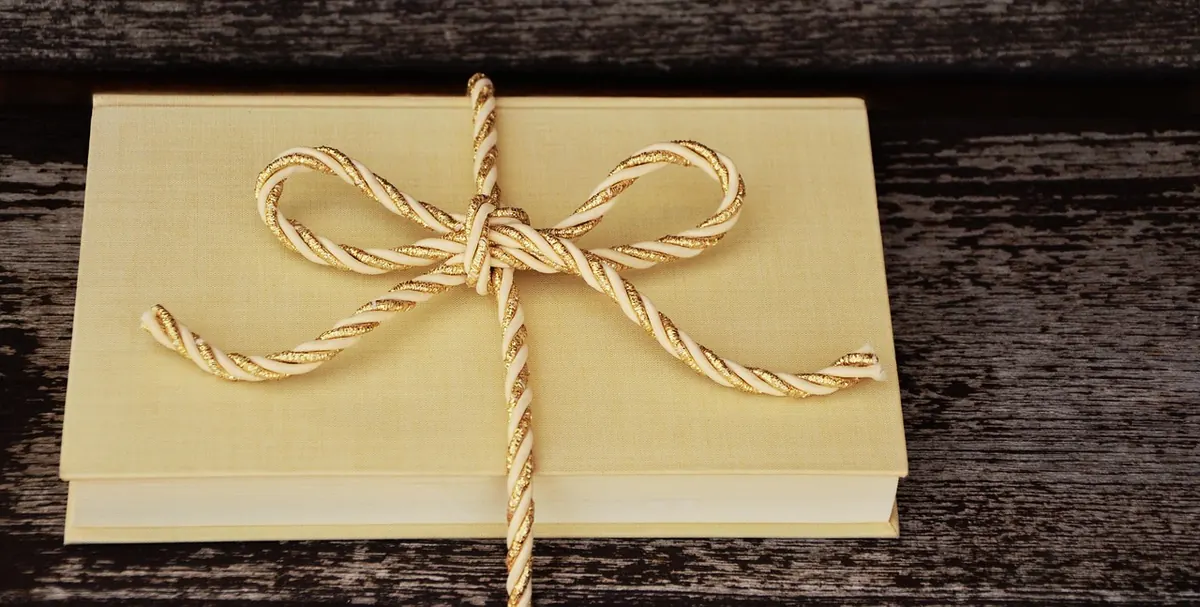
A jar handed over in a carrier bag reads as an afterthought. The same jar in tissue paper with a ribbon and a handwritten tag reads as a decision. A few things that work:
- Write on the tag where the honey came from and what to do with it. "From hives near the Malverns — try it on porridge" tells the recipient far more than a brand name.
- Reuse a wicker basket, a wooden crate or an old tin. A folded tea towel makes a fine lining.
- If you are posting, tape the lid, stand the jar inside a sealed freezer bag in case it leaks, and send it in a box rather than a padded envelope.
- Keep it out of a warm car boot. Heat softens the wax seal and can spoil the texture.
If you only do one thing, add a note in your own handwriting. It costs nothing and it is the part people keep.
Buying local: where to look and what to ask
Farmers' markets, Christmas markets, farm shops, delis, garden centres with a local section, and beekeeping association stalls are all good hunting grounds. Online, buying directly from a named apiary usually gets you fresher honey and a story to pass on. Supermarket jars labelled British are sometimes blended with imported honey, which is not a scandal, but it is worth knowing if provenance is the point of the gift.
At a stall, ask a few questions. Where were the hives? Is this year's crop? Is it runny, set or soft-set? Has it been blended? Most beekeepers will happily talk for ten minutes, and you will leave with something far more interesting than a shelf label.
Two myths worth ignoring: crystallisation is not a fault, it is what real honey does, and gentle warmth reverses it. And oilseed rape honey setting solid in the jar is normal too — it simply makes excellent toast honey.
A final check before you hand it over
- Read the label if the recipient has allergies or dietary requirements.
- Never gift honey to a household with a baby under twelve months old. Honey is not suitable for infants because of the risk of infant botulism — if you are unsure, ask a health visitor, pharmacist or GP.
- Skip the health claims. Honey is a food, not a treatment, and anyone managing a condition should speak to their GP or pharmacist rather than take advice from a gift tag.
- Check the best-before date and the jar size, then wrap it properly.
- Deliver it in person if you can. Honey is heavy, and the handover is half the gift.
Buy one jar more than you need. Someone will turn up on Christmas Eve with a present you were not expecting, and you will be glad of a spare.
Photo: congerdesign / Pixabay